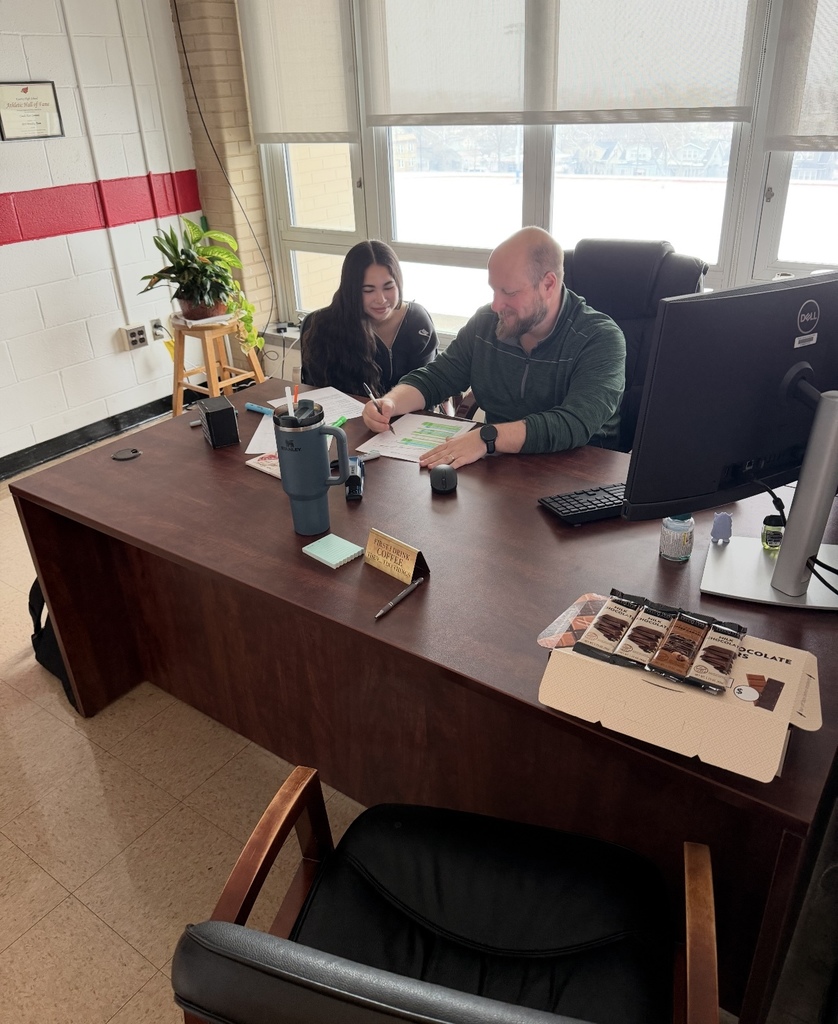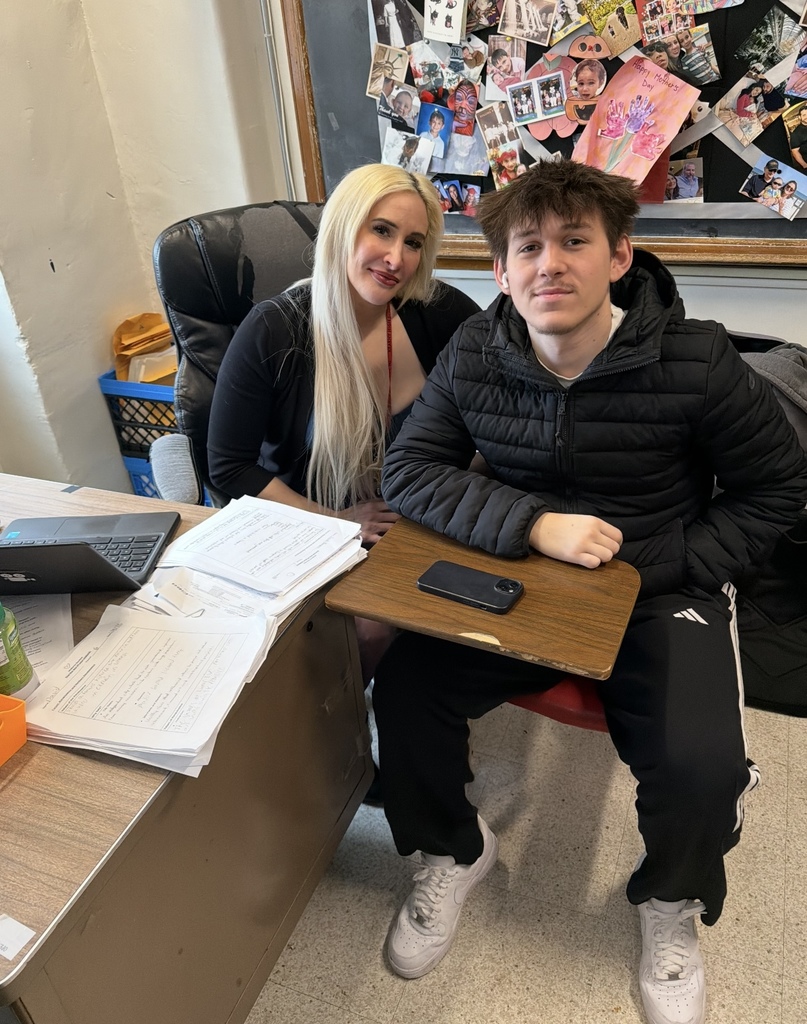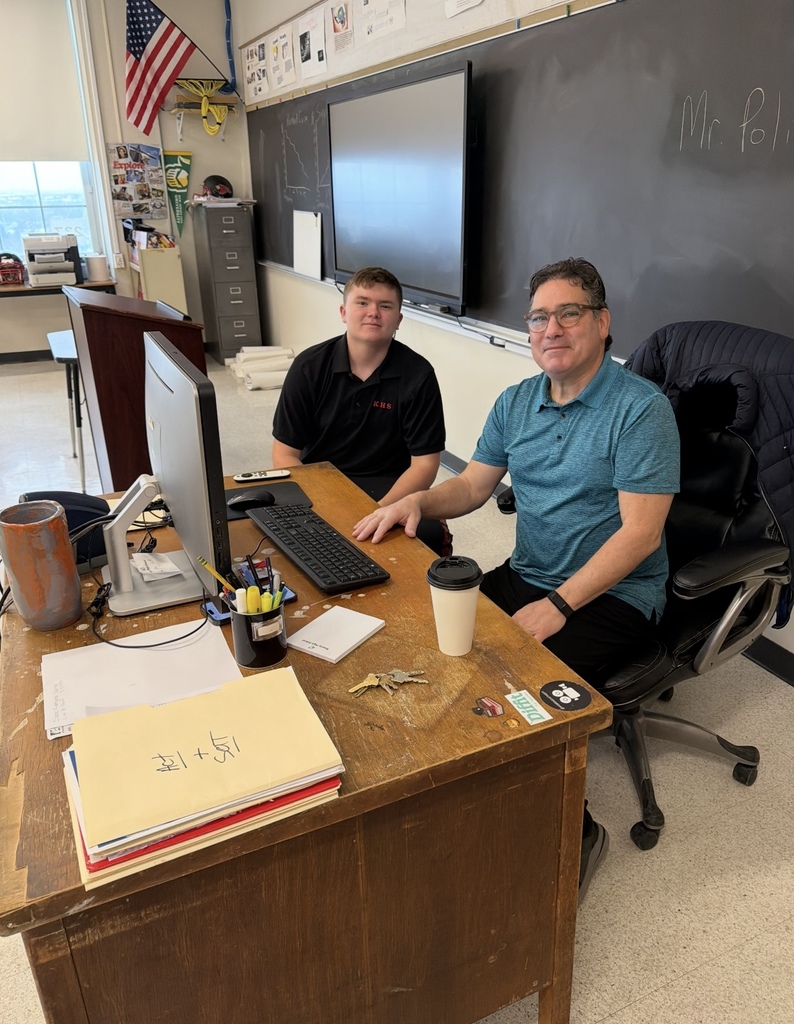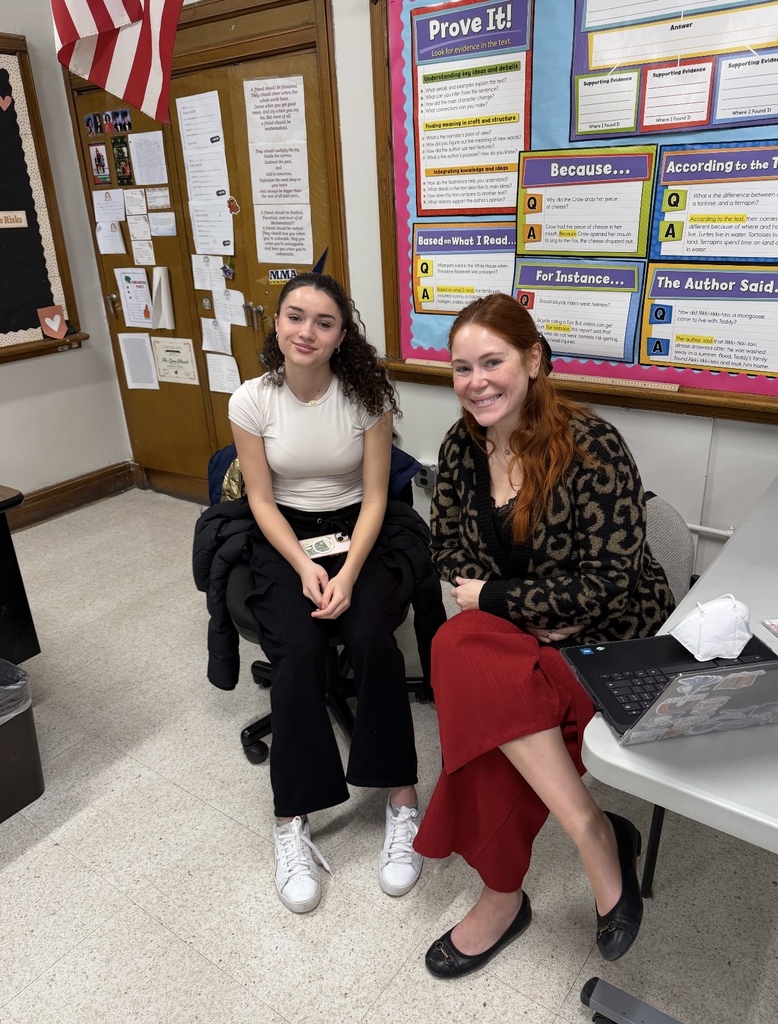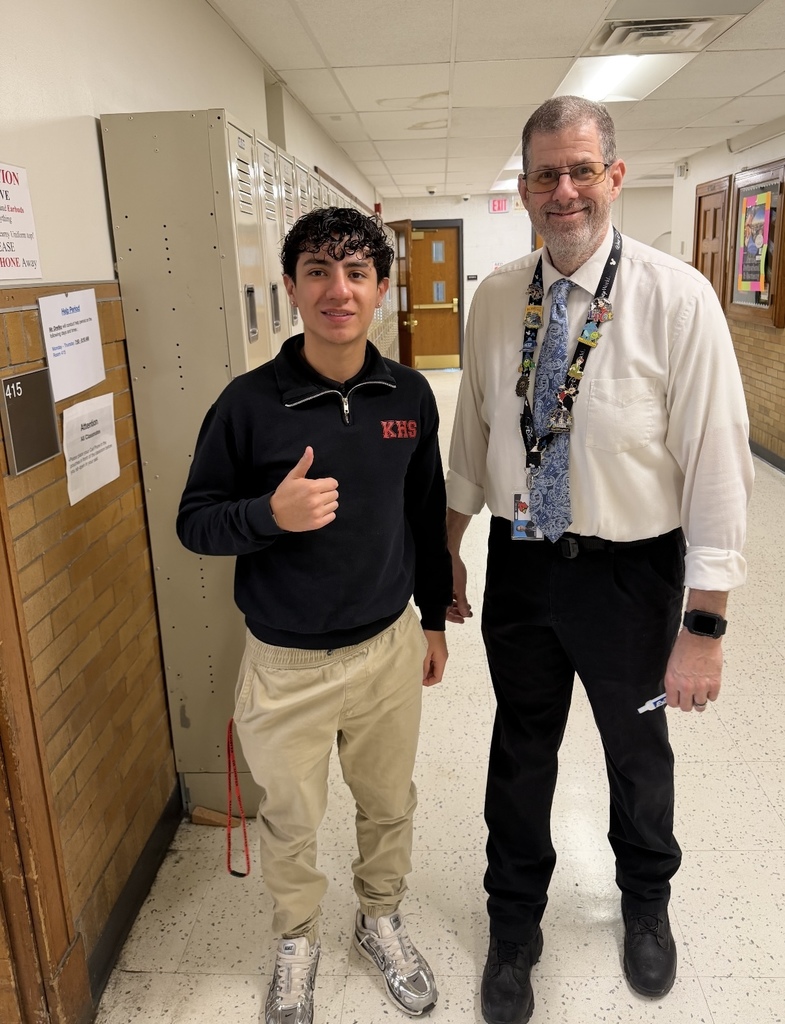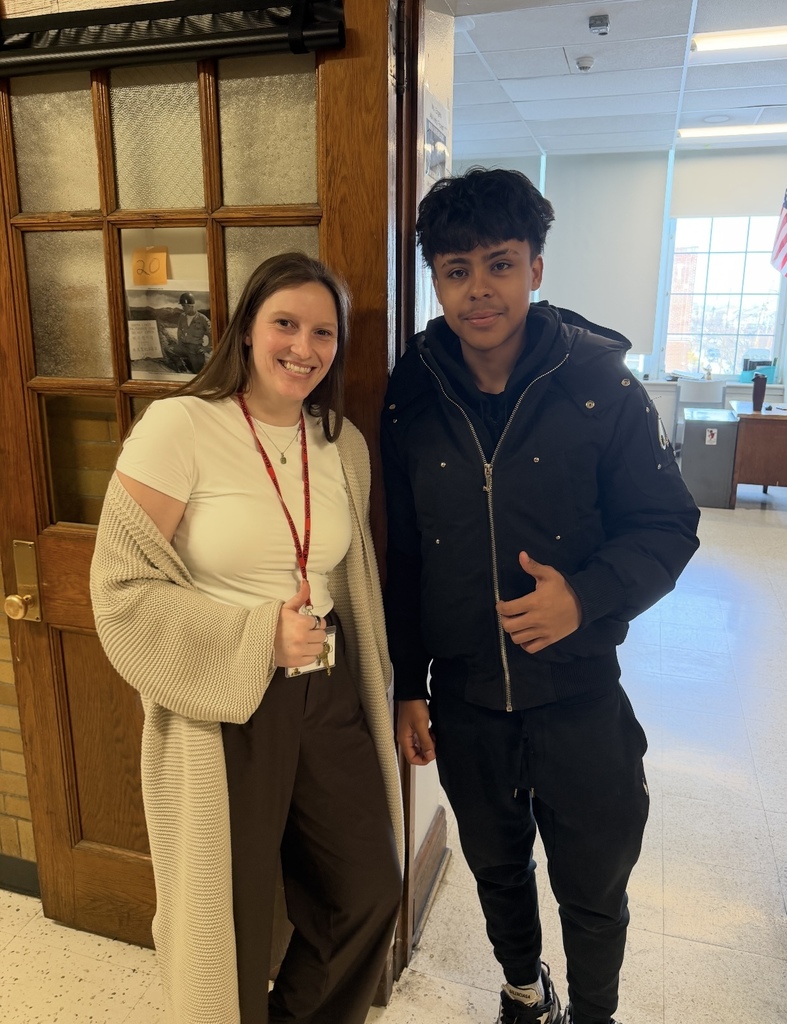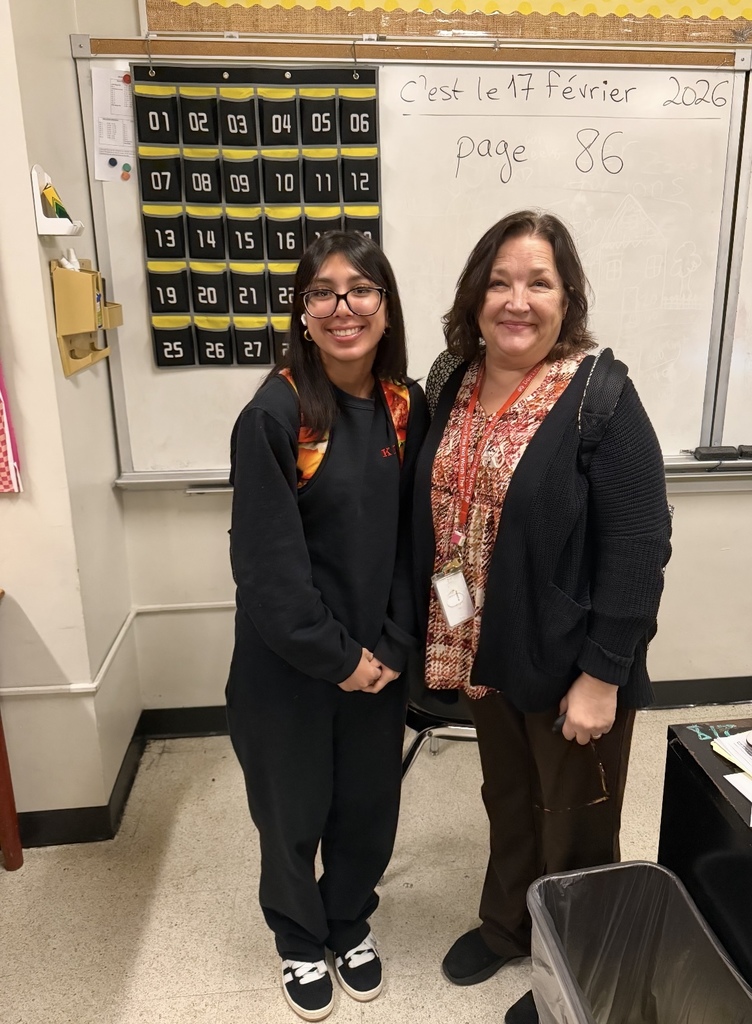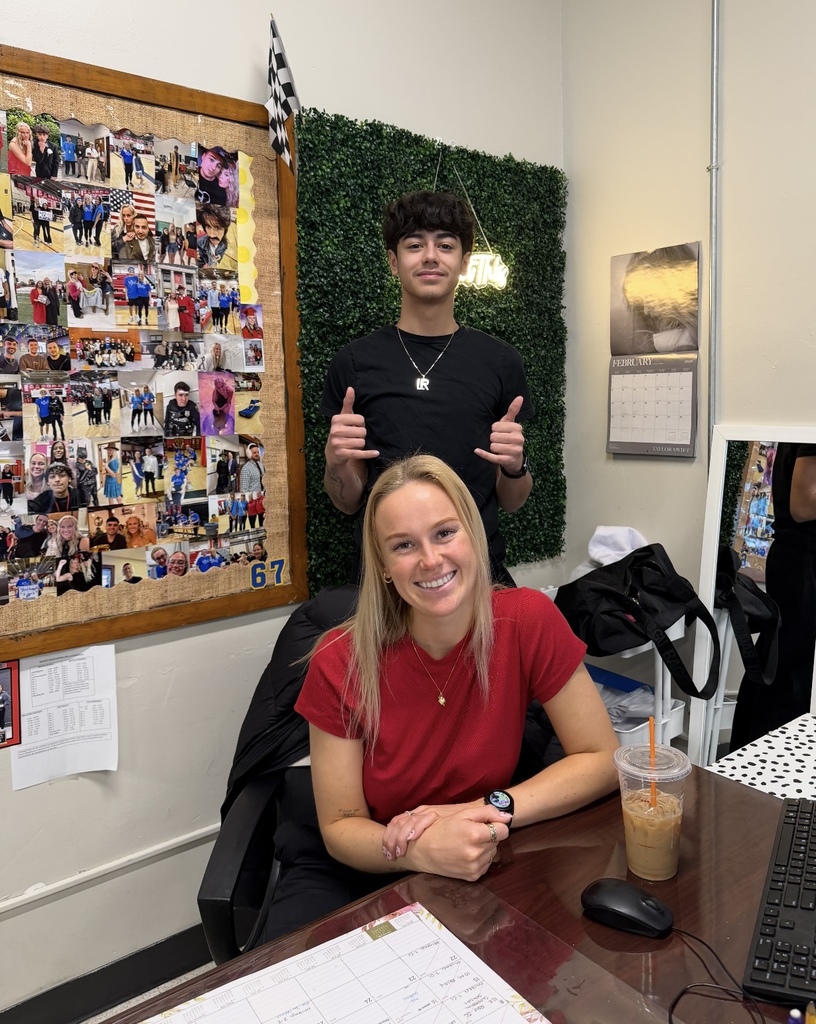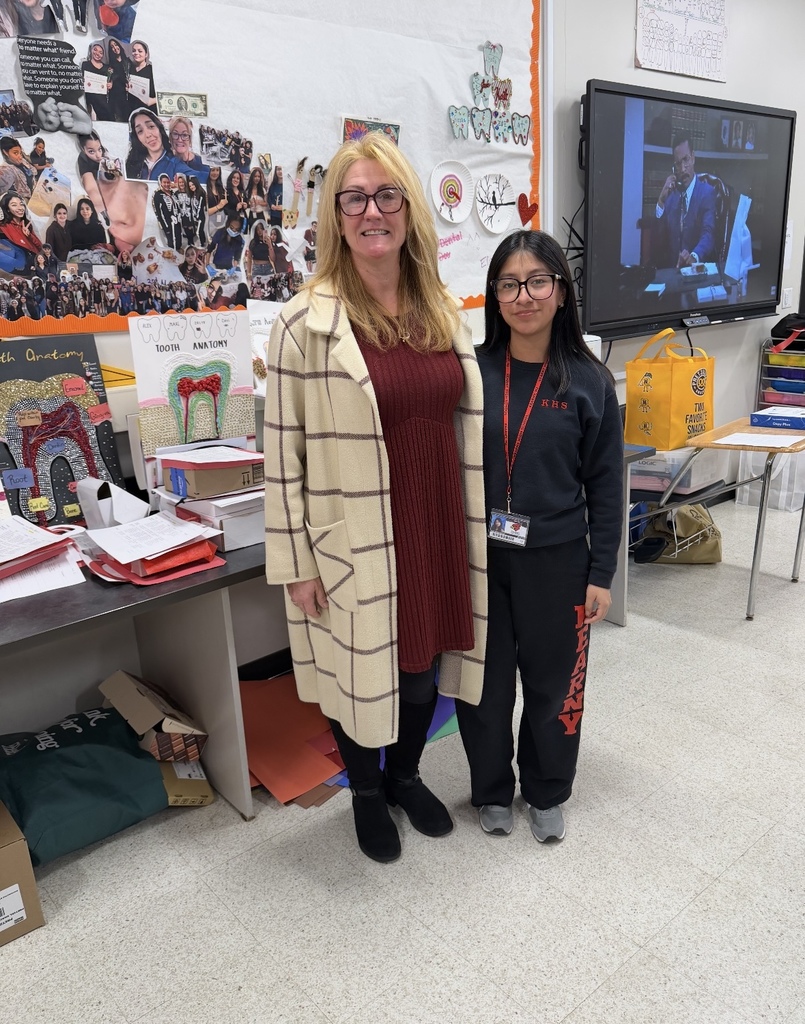
The Kearny School District would like to congratulate KHS English teacher Samantha Sansone for being honored as an NSHSS Educator of Distinction. Junior Sumaiya Ouali nominated Mrs. Sansone, describing her as “so caring and always there for you every day, even after you’re done with her class.” As an Educator of Distinction, Sansone was recognized as an outstanding role model and exemplary practitioner who has made a lasting difference in students’ lives by encouraging them to strive for excellence, not only in academics but in all their pursuits.

News 12 New Jersey reporter and Kearny High School alum Amanda Eustice visited Mr. Miller’s Broadcasting classes for a hands-on look at life as a multimedia journalist. Eustice demonstrated some of the equipment she uses in the field and walked students through her typical day: from morning meetings to pitching stories and posting updates on social media.
With true enthusiasm and authenticity, she highlighted the dedication and adaptability required in local news reporting. Miller’s students listened intently, reflecting on what makes a story newsworthy, how to capture a viewer’s attention, and how they envision their own futures in broadcasting.
Thank you, Amanda, for inspiring the next generation of storytellers and giving back to your hometown community.
With true enthusiasm and authenticity, she highlighted the dedication and adaptability required in local news reporting. Miller’s students listened intently, reflecting on what makes a story newsworthy, how to capture a viewer’s attention, and how they envision their own futures in broadcasting.
Thank you, Amanda, for inspiring the next generation of storytellers and giving back to your hometown community.


KHS:
Kearny High School provided a presentation to our high school seniors about Veterans Day, which honors all U.S. military veterans—men and women who have served in the Army, Navy, Air Force, Marine Corps, Coast Guard, and Space Force.
Our guest speakers reminded us to recognize the sacrifices veterans make to protect our freedoms, both in times of war and peace. It is a time to show gratitude, learn about their experiences, and understand the importance of service, commitment, and citizenship.
Kearny High School provided a presentation to our high school seniors about Veterans Day, which honors all U.S. military veterans—men and women who have served in the Army, Navy, Air Force, Marine Corps, Coast Guard, and Space Force.
Our guest speakers reminded us to recognize the sacrifices veterans make to protect our freedoms, both in times of war and peace. It is a time to show gratitude, learn about their experiences, and understand the importance of service, commitment, and citizenship.


KHS:
Kearny High School provided a presentation to our high school seniors about Veterans Day, which honors all U.S. military veterans—men and women who have served in the Army, Navy, Air Force, Marine Corps, Coast Guard, and Space Force.
Our guest speakers reminded us to recognize the sacrifices veterans make to protect our freedoms, both in times of war and peace. It is a time to show gratitude, learn about their experiences, and understand the importance of service, commitment, and citizenship.
Kearny High School provided a presentation to our high school seniors about Veterans Day, which honors all U.S. military veterans—men and women who have served in the Army, Navy, Air Force, Marine Corps, Coast Guard, and Space Force.
Our guest speakers reminded us to recognize the sacrifices veterans make to protect our freedoms, both in times of war and peace. It is a time to show gratitude, learn about their experiences, and understand the importance of service, commitment, and citizenship.


KHS:
Planet Earth Field Trip to Rutgers-Newark
Wednesday, November 12th, Planet Earth visited the Earth and Environmental Science Department at Rutgers-Newark. The NewGeo graduate students worked with Planet Earth students to test the soil from the Kearny High garden for pH levels and heavy metals. Our students had an opportunity to use petrographic microscopes, which let them see minerals under cross-polarized light.
The geophysics department let students try out equipment used for looking at the subsurface of the earth with ground penetrating radar, seismic reflection, and electrical conductivity and resistivity tests. The microbiology department showcased their research into Honeypot ants. Their investigation may lead to a breakthrough in food preservation.
Rutgers once again gave students a tour of the Boyden Hall Greenhouse with Professor Rabinowitz. Everyone’s camera came out when he demonstrated how the Venus Flytrap eats. Dr. Gates finished the day off with a favorite every year - The Oil Game. Students got to experience what geologists do when looking for oil and natural gas, and how fast companies can get rich or go broke.
This was the 5th year that Rutgers-Newark has invited the Planet Earth students to experience the Earth and Environmental Science Department, and as always, everyone learned a lot and had a great time.
Planet Earth Field Trip to Rutgers-Newark
Wednesday, November 12th, Planet Earth visited the Earth and Environmental Science Department at Rutgers-Newark. The NewGeo graduate students worked with Planet Earth students to test the soil from the Kearny High garden for pH levels and heavy metals. Our students had an opportunity to use petrographic microscopes, which let them see minerals under cross-polarized light.
The geophysics department let students try out equipment used for looking at the subsurface of the earth with ground penetrating radar, seismic reflection, and electrical conductivity and resistivity tests. The microbiology department showcased their research into Honeypot ants. Their investigation may lead to a breakthrough in food preservation.
Rutgers once again gave students a tour of the Boyden Hall Greenhouse with Professor Rabinowitz. Everyone’s camera came out when he demonstrated how the Venus Flytrap eats. Dr. Gates finished the day off with a favorite every year - The Oil Game. Students got to experience what geologists do when looking for oil and natural gas, and how fast companies can get rich or go broke.
This was the 5th year that Rutgers-Newark has invited the Planet Earth students to experience the Earth and Environmental Science Department, and as always, everyone learned a lot and had a great time.


KHS:
Planet Earth Field Trip to Rutgers-Newark
Wednesday, November 12th, Planet Earth visited the Earth and Environmental Science Department at Rutgers-Newark. The NewGeo graduate students worked with Planet Earth students to test the soil from the Kearny High garden for pH levels and heavy metals. Our students had an opportunity to use petrographic microscopes, which let them see minerals under cross-polarized light.
The geophysics department let students try out equipment used for looking at the subsurface of the earth with ground penetrating radar, seismic reflection, and electrical conductivity and resistivity tests. The microbiology department showcased their research into Honeypot ants. Their investigation may lead to a breakthrough in food preservation.
Rutgers once again gave students a tour of the Boyden Hall Greenhouse with Professor Rabinowitz. Everyone’s camera came out when he demonstrated how the Venus Flytrap eats. Dr. Gates finished the day off with a favorite every year - The Oil Game. Students got to experience what geologists do when looking for oil and natural gas, and how fast companies can get rich or go broke.
This was the 5th year that Rutgers-Newark has invited the Planet Earth students to experience the Earth and Environmental Science Department, and as always, everyone learned a lot and had a great time.
Planet Earth Field Trip to Rutgers-Newark
Wednesday, November 12th, Planet Earth visited the Earth and Environmental Science Department at Rutgers-Newark. The NewGeo graduate students worked with Planet Earth students to test the soil from the Kearny High garden for pH levels and heavy metals. Our students had an opportunity to use petrographic microscopes, which let them see minerals under cross-polarized light.
The geophysics department let students try out equipment used for looking at the subsurface of the earth with ground penetrating radar, seismic reflection, and electrical conductivity and resistivity tests. The microbiology department showcased their research into Honeypot ants. Their investigation may lead to a breakthrough in food preservation.
Rutgers once again gave students a tour of the Boyden Hall Greenhouse with Professor Rabinowitz. Everyone’s camera came out when he demonstrated how the Venus Flytrap eats. Dr. Gates finished the day off with a favorite every year - The Oil Game. Students got to experience what geologists do when looking for oil and natural gas, and how fast companies can get rich or go broke.
This was the 5th year that Rutgers-Newark has invited the Planet Earth students to experience the Earth and Environmental Science Department, and as always, everyone learned a lot and had a great time.


KHS:
Planet Earth Field Trip to Rutgers-Newark
Wednesday, November 12th, Planet Earth visited the Earth and Environmental Science Department at Rutgers-Newark. The NewGeo graduate students worked with Planet Earth students to test the soil from the Kearny High garden for pH levels and heavy metals. Our students had an opportunity to use petrographic microscopes, which let them see minerals under cross-polarized light.
The geophysics department let students try out equipment used for looking at the subsurface of the earth with ground penetrating radar, seismic reflection, and electrical conductivity and resistivity tests. The microbiology department showcased their research into Honeypot ants. Their investigation may lead to a breakthrough in food preservation.
Rutgers once again gave students a tour of the Boyden Hall Greenhouse with Professor Rabinowitz. Everyone’s camera came out when he demonstrated how the Venus Flytrap eats. Dr. Gates finished the day off with a favorite every year - The Oil Game. Students got to experience what geologists do when looking for oil and natural gas, and how fast companies can get rich or go broke.
This was the 5th year that Rutgers-Newark has invited the Planet Earth students to experience the Earth and Environmental Science Department, and as always, everyone learned a lot and had a great time.
Planet Earth Field Trip to Rutgers-Newark
Wednesday, November 12th, Planet Earth visited the Earth and Environmental Science Department at Rutgers-Newark. The NewGeo graduate students worked with Planet Earth students to test the soil from the Kearny High garden for pH levels and heavy metals. Our students had an opportunity to use petrographic microscopes, which let them see minerals under cross-polarized light.
The geophysics department let students try out equipment used for looking at the subsurface of the earth with ground penetrating radar, seismic reflection, and electrical conductivity and resistivity tests. The microbiology department showcased their research into Honeypot ants. Their investigation may lead to a breakthrough in food preservation.
Rutgers once again gave students a tour of the Boyden Hall Greenhouse with Professor Rabinowitz. Everyone’s camera came out when he demonstrated how the Venus Flytrap eats. Dr. Gates finished the day off with a favorite every year - The Oil Game. Students got to experience what geologists do when looking for oil and natural gas, and how fast companies can get rich or go broke.
This was the 5th year that Rutgers-Newark has invited the Planet Earth students to experience the Earth and Environmental Science Department, and as always, everyone learned a lot and had a great time.


KHS:
Planet Earth Field Trip to Rutgers-Newark
Wednesday, November 12th, Planet Earth visited the Earth and Environmental Science Department at Rutgers-Newark. The NewGeo graduate students worked with Planet Earth students to test the soil from the Kearny High garden for pH levels and heavy metals. Our students had an opportunity to use petrographic microscopes, which let them see minerals under cross-polarized light.
The geophysics department let students try out equipment used for looking at the subsurface of the earth with ground penetrating radar, seismic reflection, and electrical conductivity and resistivity tests. The microbiology department showcased their research into Honeypot ants. Their investigation may lead to a breakthrough in food preservation.
Rutgers once again gave students a tour of the Boyden Hall Greenhouse with Professor Rabinowitz. Everyone’s camera came out when he demonstrated how the Venus Flytrap eats. Dr. Gates finished the day off with a favorite every year - The Oil Game. Students got to experience what geologists do when looking for oil and natural gas, and how fast companies can get rich or go broke.
This was the 5th year that Rutgers-Newark has invited the Planet Earth students to experience the Earth and Environmental Science Department, and as always, everyone learned a lot and had a great time.
Planet Earth Field Trip to Rutgers-Newark
Wednesday, November 12th, Planet Earth visited the Earth and Environmental Science Department at Rutgers-Newark. The NewGeo graduate students worked with Planet Earth students to test the soil from the Kearny High garden for pH levels and heavy metals. Our students had an opportunity to use petrographic microscopes, which let them see minerals under cross-polarized light.
The geophysics department let students try out equipment used for looking at the subsurface of the earth with ground penetrating radar, seismic reflection, and electrical conductivity and resistivity tests. The microbiology department showcased their research into Honeypot ants. Their investigation may lead to a breakthrough in food preservation.
Rutgers once again gave students a tour of the Boyden Hall Greenhouse with Professor Rabinowitz. Everyone’s camera came out when he demonstrated how the Venus Flytrap eats. Dr. Gates finished the day off with a favorite every year - The Oil Game. Students got to experience what geologists do when looking for oil and natural gas, and how fast companies can get rich or go broke.
This was the 5th year that Rutgers-Newark has invited the Planet Earth students to experience the Earth and Environmental Science Department, and as always, everyone learned a lot and had a great time.


KHS:
Planet Earth Field Trip to Rutgers-Newark
Wednesday, November 12th, Planet Earth visited the Earth and Environmental Science Department at Rutgers-Newark. The NewGeo graduate students worked with Planet Earth students to test the soil from the Kearny High garden for pH levels and heavy metals. Our students had an opportunity to use petrographic microscopes, which let them see minerals under cross-polarized light.
The geophysics department let students try out equipment used for looking at the subsurface of the earth with ground penetrating radar, seismic reflection, and electrical conductivity and resistivity tests. The microbiology department showcased their research into Honeypot ants. Their investigation may lead to a breakthrough in food preservation.
Rutgers once again gave students a tour of the Boyden Hall Greenhouse with Professor Rabinowitz. Everyone’s camera came out when he demonstrated how the Venus Flytrap eats. Dr. Gates finished the day off with a favorite every year - The Oil Game. Students got to experience what geologists do when looking for oil and natural gas, and how fast companies can get rich or go broke.
This was the 5th year that Rutgers-Newark has invited the Planet Earth students to experience the Earth and Environmental Science Department, and as always, everyone learned a lot and had a great time.
Planet Earth Field Trip to Rutgers-Newark
Wednesday, November 12th, Planet Earth visited the Earth and Environmental Science Department at Rutgers-Newark. The NewGeo graduate students worked with Planet Earth students to test the soil from the Kearny High garden for pH levels and heavy metals. Our students had an opportunity to use petrographic microscopes, which let them see minerals under cross-polarized light.
The geophysics department let students try out equipment used for looking at the subsurface of the earth with ground penetrating radar, seismic reflection, and electrical conductivity and resistivity tests. The microbiology department showcased their research into Honeypot ants. Their investigation may lead to a breakthrough in food preservation.
Rutgers once again gave students a tour of the Boyden Hall Greenhouse with Professor Rabinowitz. Everyone’s camera came out when he demonstrated how the Venus Flytrap eats. Dr. Gates finished the day off with a favorite every year - The Oil Game. Students got to experience what geologists do when looking for oil and natural gas, and how fast companies can get rich or go broke.
This was the 5th year that Rutgers-Newark has invited the Planet Earth students to experience the Earth and Environmental Science Department, and as always, everyone learned a lot and had a great time.


KHS:
Planet Earth Field Trip to Rutgers-Newark
Wednesday, November 12th, Planet Earth visited the Earth and Environmental Science Department at Rutgers-Newark. The NewGeo graduate students worked with Planet Earth students to test the soil from the Kearny High garden for pH levels and heavy metals. Our students had an opportunity to use petrographic microscopes, which let them see minerals under cross-polarized light.
The geophysics department let students try out equipment used for looking at the subsurface of the earth with ground penetrating radar, seismic reflection, and electrical conductivity and resistivity tests. The microbiology department showcased their research into Honeypot ants. Their investigation may lead to a breakthrough in food preservation.
Rutgers once again gave students a tour of the Boyden Hall Greenhouse with Professor Rabinowitz. Everyone’s camera came out when he demonstrated how the Venus Flytrap eats. Dr. Gates finished the day off with a favorite every year - The Oil Game. Students got to experience what geologists do when looking for oil and natural gas, and how fast companies can get rich or go broke.
This was the 5th year that Rutgers-Newark has invited the Planet Earth students to experience the Earth and Environmental Science Department, and as always, everyone learned a lot and had a great time.
Planet Earth Field Trip to Rutgers-Newark
Wednesday, November 12th, Planet Earth visited the Earth and Environmental Science Department at Rutgers-Newark. The NewGeo graduate students worked with Planet Earth students to test the soil from the Kearny High garden for pH levels and heavy metals. Our students had an opportunity to use petrographic microscopes, which let them see minerals under cross-polarized light.
The geophysics department let students try out equipment used for looking at the subsurface of the earth with ground penetrating radar, seismic reflection, and electrical conductivity and resistivity tests. The microbiology department showcased their research into Honeypot ants. Their investigation may lead to a breakthrough in food preservation.
Rutgers once again gave students a tour of the Boyden Hall Greenhouse with Professor Rabinowitz. Everyone’s camera came out when he demonstrated how the Venus Flytrap eats. Dr. Gates finished the day off with a favorite every year - The Oil Game. Students got to experience what geologists do when looking for oil and natural gas, and how fast companies can get rich or go broke.
This was the 5th year that Rutgers-Newark has invited the Planet Earth students to experience the Earth and Environmental Science Department, and as always, everyone learned a lot and had a great time.


KHS:
Planet Earth Field Trip to Rutgers-Newark
Wednesday, November 12th, Planet Earth visited the Earth and Environmental Science Department at Rutgers-Newark. The NewGeo graduate students worked with Planet Earth students to test the soil from the Kearny High garden for pH levels and heavy metals. Our students had an opportunity to use petrographic microscopes, which let them see minerals under cross-polarized light.
The geophysics department let students try out equipment used for looking at the subsurface of the earth with ground penetrating radar, seismic reflection, and electrical conductivity and resistivity tests. The microbiology department showcased their research into Honeypot ants. Their investigation may lead to a breakthrough in food preservation.
Rutgers once again gave students a tour of the Boyden Hall Greenhouse with Professor Rabinowitz. Everyone’s camera came out when he demonstrated how the Venus Flytrap eats. Dr. Gates finished the day off with a favorite every year - The Oil Game. Students got to experience what geologists do when looking for oil and natural gas, and how fast companies can get rich or go broke.
This was the 5th year that Rutgers-Newark has invited the Planet Earth students to experience the Earth and Environmental Science Department, and as always, everyone learned a lot and had a great time.
Planet Earth Field Trip to Rutgers-Newark
Wednesday, November 12th, Planet Earth visited the Earth and Environmental Science Department at Rutgers-Newark. The NewGeo graduate students worked with Planet Earth students to test the soil from the Kearny High garden for pH levels and heavy metals. Our students had an opportunity to use petrographic microscopes, which let them see minerals under cross-polarized light.
The geophysics department let students try out equipment used for looking at the subsurface of the earth with ground penetrating radar, seismic reflection, and electrical conductivity and resistivity tests. The microbiology department showcased their research into Honeypot ants. Their investigation may lead to a breakthrough in food preservation.
Rutgers once again gave students a tour of the Boyden Hall Greenhouse with Professor Rabinowitz. Everyone’s camera came out when he demonstrated how the Venus Flytrap eats. Dr. Gates finished the day off with a favorite every year - The Oil Game. Students got to experience what geologists do when looking for oil and natural gas, and how fast companies can get rich or go broke.
This was the 5th year that Rutgers-Newark has invited the Planet Earth students to experience the Earth and Environmental Science Department, and as always, everyone learned a lot and had a great time.


KHS:
Planet Earth Field Trip to Rutgers-Newark
Wednesday, November 12th, Planet Earth visited the Earth and Environmental Science Department at Rutgers-Newark. The NewGeo graduate students worked with Planet Earth students to test the soil from the Kearny High garden for pH levels and heavy metals. Our students had an opportunity to use petrographic microscopes, which let them see minerals under cross-polarized light.
The geophysics department let students try out equipment used for looking at the subsurface of the earth with ground penetrating radar, seismic reflection, and electrical conductivity and resistivity tests. The microbiology department showcased their research into Honeypot ants. Their investigation may lead to a breakthrough in food preservation.
Rutgers once again gave students a tour of the Boyden Hall Greenhouse with Professor Rabinowitz. Everyone’s camera came out when he demonstrated how the Venus Flytrap eats. Dr. Gates finished the day off with a favorite every year - The Oil Game. Students got to experience what geologists do when looking for oil and natural gas, and how fast companies can get rich or go broke.
This was the 5th year that Rutgers-Newark has invited the Planet Earth students to experience the Earth and Environmental Science Department, and as always, everyone learned a lot and had a great time.
Planet Earth Field Trip to Rutgers-Newark
Wednesday, November 12th, Planet Earth visited the Earth and Environmental Science Department at Rutgers-Newark. The NewGeo graduate students worked with Planet Earth students to test the soil from the Kearny High garden for pH levels and heavy metals. Our students had an opportunity to use petrographic microscopes, which let them see minerals under cross-polarized light.
The geophysics department let students try out equipment used for looking at the subsurface of the earth with ground penetrating radar, seismic reflection, and electrical conductivity and resistivity tests. The microbiology department showcased their research into Honeypot ants. Their investigation may lead to a breakthrough in food preservation.
Rutgers once again gave students a tour of the Boyden Hall Greenhouse with Professor Rabinowitz. Everyone’s camera came out when he demonstrated how the Venus Flytrap eats. Dr. Gates finished the day off with a favorite every year - The Oil Game. Students got to experience what geologists do when looking for oil and natural gas, and how fast companies can get rich or go broke.
This was the 5th year that Rutgers-Newark has invited the Planet Earth students to experience the Earth and Environmental Science Department, and as always, everyone learned a lot and had a great time.


KHS:
Planet Earth Field Trip to Rutgers-Newark
Wednesday, November 12th, Planet Earth visited the Earth and Environmental Science Department at Rutgers-Newark. The NewGeo graduate students worked with Planet Earth students to test the soil from the Kearny High garden for pH levels and heavy metals. Our students had an opportunity to use petrographic microscopes, which let them see minerals under cross-polarized light.
The geophysics department let students try out equipment used for looking at the subsurface of the earth with ground penetrating radar, seismic reflection, and electrical conductivity and resistivity tests. The microbiology department showcased their research into Honeypot ants. Their investigation may lead to a breakthrough in food preservation.
Rutgers once again gave students a tour of the Boyden Hall Greenhouse with Professor Rabinowitz. Everyone’s camera came out when he demonstrated how the Venus Flytrap eats. Dr. Gates finished the day off with a favorite every year - The Oil Game. Students got to experience what geologists do when looking for oil and natural gas, and how fast companies can get rich or go broke.
This was the 5th year that Rutgers-Newark has invited the Planet Earth students to experience the Earth and Environmental Science Department, and as always, everyone learned a lot and had a great time.
Planet Earth Field Trip to Rutgers-Newark
Wednesday, November 12th, Planet Earth visited the Earth and Environmental Science Department at Rutgers-Newark. The NewGeo graduate students worked with Planet Earth students to test the soil from the Kearny High garden for pH levels and heavy metals. Our students had an opportunity to use petrographic microscopes, which let them see minerals under cross-polarized light.
The geophysics department let students try out equipment used for looking at the subsurface of the earth with ground penetrating radar, seismic reflection, and electrical conductivity and resistivity tests. The microbiology department showcased their research into Honeypot ants. Their investigation may lead to a breakthrough in food preservation.
Rutgers once again gave students a tour of the Boyden Hall Greenhouse with Professor Rabinowitz. Everyone’s camera came out when he demonstrated how the Venus Flytrap eats. Dr. Gates finished the day off with a favorite every year - The Oil Game. Students got to experience what geologists do when looking for oil and natural gas, and how fast companies can get rich or go broke.
This was the 5th year that Rutgers-Newark has invited the Planet Earth students to experience the Earth and Environmental Science Department, and as always, everyone learned a lot and had a great time.


KHS:
Planet Earth Field Trip to Rutgers-Newark
Wednesday, November 12th, Planet Earth visited the Earth and Environmental Science Department at Rutgers-Newark. The NewGeo graduate students worked with Planet Earth students to test the soil from the Kearny High garden for pH levels and heavy metals. Our students had an opportunity to use petrographic microscopes, which let them see minerals under cross-polarized light.
The geophysics department let students try out equipment used for looking at the subsurface of the earth with ground penetrating radar, seismic reflection, and electrical conductivity and resistivity tests. The microbiology department showcased their research into Honeypot ants. Their investigation may lead to a breakthrough in food preservation.
Rutgers once again gave students a tour of the Boyden Hall Greenhouse with Professor Rabinowitz. Everyone’s camera came out when he demonstrated how the Venus Flytrap eats. Dr. Gates finished the day off with a favorite every year - The Oil Game. Students got to experience what geologists do when looking for oil and natural gas, and how fast companies can get rich or go broke.
This was the 5th year that Rutgers-Newark has invited the Planet Earth students to experience the Earth and Environmental Science Department, and as always, everyone learned a lot and had a great time.
Planet Earth Field Trip to Rutgers-Newark
Wednesday, November 12th, Planet Earth visited the Earth and Environmental Science Department at Rutgers-Newark. The NewGeo graduate students worked with Planet Earth students to test the soil from the Kearny High garden for pH levels and heavy metals. Our students had an opportunity to use petrographic microscopes, which let them see minerals under cross-polarized light.
The geophysics department let students try out equipment used for looking at the subsurface of the earth with ground penetrating radar, seismic reflection, and electrical conductivity and resistivity tests. The microbiology department showcased their research into Honeypot ants. Their investigation may lead to a breakthrough in food preservation.
Rutgers once again gave students a tour of the Boyden Hall Greenhouse with Professor Rabinowitz. Everyone’s camera came out when he demonstrated how the Venus Flytrap eats. Dr. Gates finished the day off with a favorite every year - The Oil Game. Students got to experience what geologists do when looking for oil and natural gas, and how fast companies can get rich or go broke.
This was the 5th year that Rutgers-Newark has invited the Planet Earth students to experience the Earth and Environmental Science Department, and as always, everyone learned a lot and had a great time.


KHS:
Planet Earth Field Trip to Rutgers-Newark
Wednesday, November 12th, Planet Earth visited the Earth and Environmental Science Department at Rutgers-Newark. The NewGeo graduate students worked with Planet Earth students to test the soil from the Kearny High garden for pH levels and heavy metals. Our students had an opportunity to use petrographic microscopes, which let them see minerals under cross-polarized light.
The geophysics department let students try out equipment used for looking at the subsurface of the earth with ground penetrating radar, seismic reflection, and electrical conductivity and resistivity tests. The microbiology department showcased their research into Honeypot ants. Their investigation may lead to a breakthrough in food preservation.
Rutgers once again gave students a tour of the Boyden Hall Greenhouse with Professor Rabinowitz. Everyone’s camera came out when he demonstrated how the Venus Flytrap eats. Dr. Gates finished the day off with a favorite every year - The Oil Game. Students got to experience what geologists do when looking for oil and natural gas, and how fast companies can get rich or go broke.
This was the 5th year that Rutgers-Newark has invited the Planet Earth students to experience the Earth and Environmental Science Department, and as always, everyone learned a lot and had a great time.
Planet Earth Field Trip to Rutgers-Newark
Wednesday, November 12th, Planet Earth visited the Earth and Environmental Science Department at Rutgers-Newark. The NewGeo graduate students worked with Planet Earth students to test the soil from the Kearny High garden for pH levels and heavy metals. Our students had an opportunity to use petrographic microscopes, which let them see minerals under cross-polarized light.
The geophysics department let students try out equipment used for looking at the subsurface of the earth with ground penetrating radar, seismic reflection, and electrical conductivity and resistivity tests. The microbiology department showcased their research into Honeypot ants. Their investigation may lead to a breakthrough in food preservation.
Rutgers once again gave students a tour of the Boyden Hall Greenhouse with Professor Rabinowitz. Everyone’s camera came out when he demonstrated how the Venus Flytrap eats. Dr. Gates finished the day off with a favorite every year - The Oil Game. Students got to experience what geologists do when looking for oil and natural gas, and how fast companies can get rich or go broke.
This was the 5th year that Rutgers-Newark has invited the Planet Earth students to experience the Earth and Environmental Science Department, and as always, everyone learned a lot and had a great time.


KHS:
Planet Earth Field Trip to Rutgers-Newark
Wednesday, November 12th, Planet Earth visited the Earth and Environmental Science Department at Rutgers-Newark. The NewGeo graduate students worked with Planet Earth students to test the soil from the Kearny High garden for pH levels and heavy metals. Our students had an opportunity to use petrographic microscopes, which let them see minerals under cross-polarized light.
The geophysics department let students try out equipment used for looking at the subsurface of the earth with ground penetrating radar, seismic reflection, and electrical conductivity and resistivity tests. The microbiology department showcased their research into Honeypot ants. Their investigation may lead to a breakthrough in food preservation.
Rutgers once again gave students a tour of the Boyden Hall Greenhouse with Professor Rabinowitz. Everyone’s camera came out when he demonstrated how the Venus Flytrap eats. Dr. Gates finished the day off with a favorite every year - The Oil Game. Students got to experience what geologists do when looking for oil and natural gas, and how fast companies can get rich or go broke.
This was the 5th year that Rutgers-Newark has invited the Planet Earth students to experience the Earth and Environmental Science Department, and as always, everyone learned a lot and had a great time.
Planet Earth Field Trip to Rutgers-Newark
Wednesday, November 12th, Planet Earth visited the Earth and Environmental Science Department at Rutgers-Newark. The NewGeo graduate students worked with Planet Earth students to test the soil from the Kearny High garden for pH levels and heavy metals. Our students had an opportunity to use petrographic microscopes, which let them see minerals under cross-polarized light.
The geophysics department let students try out equipment used for looking at the subsurface of the earth with ground penetrating radar, seismic reflection, and electrical conductivity and resistivity tests. The microbiology department showcased their research into Honeypot ants. Their investigation may lead to a breakthrough in food preservation.
Rutgers once again gave students a tour of the Boyden Hall Greenhouse with Professor Rabinowitz. Everyone’s camera came out when he demonstrated how the Venus Flytrap eats. Dr. Gates finished the day off with a favorite every year - The Oil Game. Students got to experience what geologists do when looking for oil and natural gas, and how fast companies can get rich or go broke.
This was the 5th year that Rutgers-Newark has invited the Planet Earth students to experience the Earth and Environmental Science Department, and as always, everyone learned a lot and had a great time.


KHS:
Planet Earth Field Trip to Rutgers-Newark
Wednesday, November 12th, Planet Earth visited the Earth and Environmental Science Department at Rutgers-Newark. The NewGeo graduate students worked with Planet Earth students to test the soil from the Kearny High garden for pH levels and heavy metals. Our students had an opportunity to use petrographic microscopes, which let them see minerals under cross-polarized light.
The geophysics department let students try out equipment used for looking at the subsurface of the earth with ground penetrating radar, seismic reflection, and electrical conductivity and resistivity tests. The microbiology department showcased their research into Honeypot ants. Their investigation may lead to a breakthrough in food preservation.
Rutgers once again gave students a tour of the Boyden Hall Greenhouse with Professor Rabinowitz. Everyone’s camera came out when he demonstrated how the Venus Flytrap eats. Dr. Gates finished the day off with a favorite every year - The Oil Game. Students got to experience what geologists do when looking for oil and natural gas, and how fast companies can get rich or go broke.
This was the 5th year that Rutgers-Newark has invited the Planet Earth students to experience the Earth and Environmental Science Department, and as always, everyone learned a lot and had a great time.
Planet Earth Field Trip to Rutgers-Newark
Wednesday, November 12th, Planet Earth visited the Earth and Environmental Science Department at Rutgers-Newark. The NewGeo graduate students worked with Planet Earth students to test the soil from the Kearny High garden for pH levels and heavy metals. Our students had an opportunity to use petrographic microscopes, which let them see minerals under cross-polarized light.
The geophysics department let students try out equipment used for looking at the subsurface of the earth with ground penetrating radar, seismic reflection, and electrical conductivity and resistivity tests. The microbiology department showcased their research into Honeypot ants. Their investigation may lead to a breakthrough in food preservation.
Rutgers once again gave students a tour of the Boyden Hall Greenhouse with Professor Rabinowitz. Everyone’s camera came out when he demonstrated how the Venus Flytrap eats. Dr. Gates finished the day off with a favorite every year - The Oil Game. Students got to experience what geologists do when looking for oil and natural gas, and how fast companies can get rich or go broke.
This was the 5th year that Rutgers-Newark has invited the Planet Earth students to experience the Earth and Environmental Science Department, and as always, everyone learned a lot and had a great time.


Saluting the heroes who served our nation. #VeteransDay

The Kearny High School 2025 senior play is “Puffs” by Matt Cox, a parody of the Harry Potter book series by J.K. Rowling, but from the perspective of the "Puffs": that is, members of the Hogwarts house, Hufflepuff.
The play will be performed on December 5 & 6 at 7:00pm in the Kearny’s High School auditorium under the direction of Milagros Gonzalez. The cost of the ticket is $6 for students and senior citizens and $8 for adults. All proceeds go to the class of 2026.

From flying drones to diving into AI and Virtual Reality, our KHS Computer Science students experienced the power of computing firsthand at Montclair State University! Huge thanks to the amazing professors and students who shared their passion and inspired the next generation of tech innovators. #DayOfComputing #STEMEducation